

An atmosphere of nervous excitement. Visible is the frosty air coming from my rivals as they do the "about to run" jiggle on the beginning point.
A rapid movement of the hips.
I'm at my local weekly parkrun event and I'm focused. It's almost time...
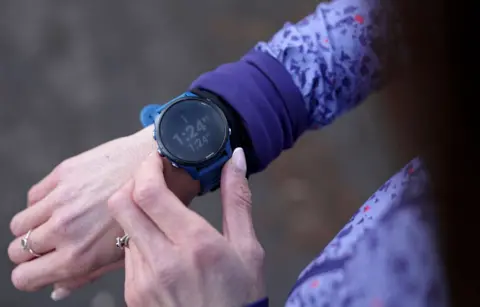
Wait a second. I need to sort my watch. The same goes for the guy next to me.
The person in the line sighs. I refuse to go until… done! Connection established, and I'm running.
Amidst the crowd, it's challenging to spot a arm without a wearable on it. And this extends beyond us athletes who use them.
It's a booming, multi-billion dollar market. Names like Apple Watch dominate, featuring an broad array of diverse devices to cater to a spectrum of budgets. According to how feature-packed the model you go for, price tags can range from a hundred pounds to a significant investment.
"I find it infuriating, it's impossible to switch off."
"It provides solace… It's like a companion encouraging me."
"Please don't notify me I've experienced a bad night's sleep."
Just some of the responses people have shared from other tracker enthusiasts when I inquire what they think of theirs.
The Monitoring Conundrum
My current opinion on mine? Right now, annoying. It's indicating I'm off pace, making me wonder whether the overhead branches I'm passing under are interfering with my GPS connection.
Countless individuals of us strap these small monitors onto our wrists and wear them constantly, seemingly comfortable with the fact they're perpetually recording us.
Long past are the days when we depended on them only to give us an idea of our step count. Today, they can analyse our sleep quality, heart rate, heart rate variability (HRV), our recovery score.
It's a challenge to find a health indicator they fail to monitor.
But can they do what they claim to do? And are the numbers we scrutinise a true reflection of our actual health? Do they enhance our mental and physical wellbeing, or do the plethora of measurements and motivational messages just contribute to our sense of overwhelm?

A Complicated Bond
"I find myself getting a a little preoccupied with mine," a wearer confesses.
While she appreciates how her device monitors her workouts, she finds some of its other functions "excessive" at times - a feeling first discovered during a significant period.
Before she realised she could change its configuration, her smartwatch constantly alerted her she was being insufficiently energetic enough. Later on, the watch keeps telling her she's had a bad night's sleep.
"I've got a infant, I don't need to be informed my sleep was poor," she says. "I know that perfectly well."
Is it not possible to just take it off?
"It's possible, theoretically, but I've got this love-hate relationship with it," she explains. "I love it for its fitness insights, but I'm unsure whether the myriad other functions it can now do is perhaps overkill for me."
The Technology Behind the Tracking
Each model of smartwatch has its own novel way of measuring your bodily functions and processing your data, but the most use optical sensors on the reverse of the watch.
They usually shine small, green LED lights onto your wrist which can observe blood flow, detecting your heartbeat. More advanced devices analyse changes in the skin conductance that passes over the skin to assess your stress levels.
The Professional Viewpoint
A professor says that in general for smartwatches, it's a "delicate equilibrium" - while the continuously improving tech could actually aid early diagnosis, "identifying issues before we notice anything", it could also turn us device users into the "anxious healthy".
He points out that newer wearables can conduct tests like heart rhythm analysis, which constantly monitor how normal the heart is. They can notify if someone is experiencing a heart arrhythmia, where there is erratic impulses in the heart causing an irregular heartbeat.
This does not automatically signal someone is imminently going to suffer a cardiac event, but it can give an advance notice they might be more at risk of a heart problem in the years to come.
But how to make sense of these readings is complicated. The expert fears that as more functions are incorporated, people may not be able to fully contextualise their data.
"I'm not entirely convinced that having the capacity to monitor so many metrics is such a good idea," he says.
A professor focusing on cardiology concurs. Her work into the impact of wearable tech on a set of heart condition patients suggested a significant portion of those who were given devices to monitor their heart health experienced heightened worry and were "far more likely to use doctor's time".
She identified a vicious circle with her patients - they spotted a alarming metric on their watch. They grew concerned. Their pulse increased. They got more worried. They looked a second time, and their reading increased again.
"When people are presented with data about ourselves that we lack context for then, of course, we are going to want to know more," the psychologist says. "We look, we obsess - it becomes a self-fulfilling prophecy."
